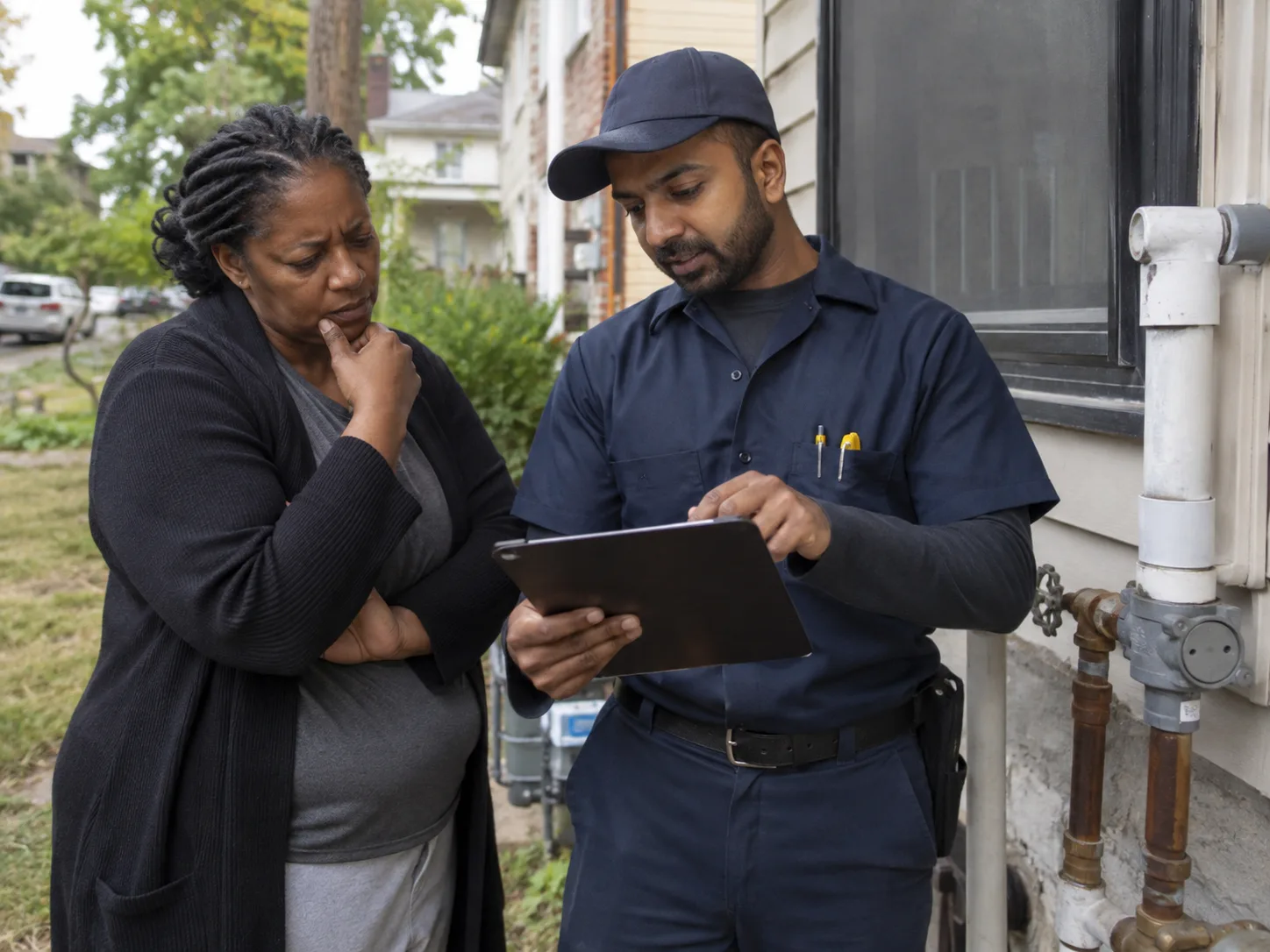
Leak detection and repair in MD, DC and Northern VA
A stain on the ceiling is rarely right under the leak. We start at your water meter, narrow it down section by section, and open the wall once, where the water actually is.
Where leaks show up
We trace the leak in your Maryland, DC or Northern Virginia home first, then repair the pipe, fixture, drain or fitting it came from.
- Water stains
- Visible pipe leaks
- Water inside cabinets
- Ceiling leaks
- Wall leaks
- Fixture leaks
- Burst pipes
What changes the price
- How easy it is to get at the pipe we suspect
- Whether it's a supply leak under pressure or a drain leak that only shows when water runs
- Whether it's in a slab, a wall or a ceiling
One hole in the wall, in the right place
Rush a hidden leak and you end up with five holes in the drywall and the leak still running.
- Meter before hammer
- The water meter tells us whether anything is moving with every fixture off. That one test decides whether the search is on the supply side at all.
- Narrowed by zone
- We split the system into sections and follow moisture readings and the run of the pipe, so the search is down to a small patch of wall before anything is opened.
- Shown before it is cut
- You see where we believe the leak is and what the opening involves before anything is cut. The wall repair is priced as its own job.
What we will not do on a hidden leak
We won't price a leak over the phone before anyone has found it, and we won't close a wall that's still wet inside.
Until we know where the water is coming from, any number is a guess about where the hole goes and how big it gets. So the search gets its own price first, and the repair gets priced once the leak is out in the open where you can see it.
A burst pipe jumps ahead of routine work and gets scheduled within 48 hours. Once we open the wall, it stays open until the cavity dries out, and we tell you that before we cut.
Before you book leak detection
Five holes to find one leak.
We narrow it down zone by zone with pressure, moisture readings and the way the pipe runs. Before anything is cut, we show you where the opening will go.
Paying someone to look and they find nothing.
The meter test comes first. With everything off, either the meter moves or it doesn’t. The search itself has a written price before it starts.
Everyone is staring at the wrong spot.
The stain is rarely under the leak. Water runs along a joist or a pipe for a few feet before it drops.
The hole is left in your wall.
We open once, where the leak is, and leave the edges clean for whoever patches it. We won’t close a cavity that’s still wet. The patch is priced on its own, before we cut.
When leaks show up around DC
Water damage and freezing make up about 22 percent of home insurance claims. A pipe that froze in February can weep inside a wall for weeks, so check under sinks and along basement ceilings after the last freeze, around April 1. Read how leak detection works.
Get a free leak detection quote
- The search is priced in writing before it starts
- Leak repairs carry our 60 to 90 day warranty
Or call us
(240) 695-4415Request Leak Detection & Repair
We take insurance jobs. Financing may also be available for qualifying projects. Ask when you call.
How the job runs
- 1We start at the water meter. With every fixture closed, a moving dial tells us water is escaping somewhere.
- 2Then we close off one section at a time and follow pressure, moisture readings and the run of the pipe until the search is down to a small area.
- 3We show you where we think it is and what opening the wall or ceiling involves, before anything is cut.
- 4Once the leak is in the open, we price the repair and fix it.
- 5If the water has already damaged drywall or a ceiling, we tell you what putting that back involves, priced as its own job.
Questions we get about leak detection and repair
Can you find a leak without opening walls?
⌄
The ceiling below is stained. Is that where the leak is?
⌄
Do I need leak detection or just a plumber?
⌄
How does leak detection work?
⌄
Do I need to shut off my water before the plumber arrives?
⌄
What should I do with a leak while I wait for a plumber?
⌄
Can I fix a small leak myself or do I need a licensed plumber?
⌄
How do I know if a leak is inside the wall?
⌄
Water showing up and no idea why?
Before you call, note where the water shows up and when it gets worse. After a shower, overnight and with the heat on all point in different directions, and knowing which shortens the search.